What is Kubernetes (K8s)?
Kubernetes is a portable, extensible open-source platform for managing containerized workloads and services, that facilitates both declarative configuration and automation. It has a large, rapidly growing ecosystem. Kubernetes services, support, and tools are widely available.
Company Details
Need Assistance?
We're here to help you with understanding our reports and the data inside to help you make decisions.
Get AssistanceKubernetes (K8s) Ratings
Real user data aggregated to summarize the product performance and customer experience.
Download the entire Product Scorecard
to access more information on Kubernetes (K8s).
Product scores listed below represent current data. This may be different from data contained in reports and awards, which express data as of their publication date.
92 Likeliness to Recommend
100 Plan to Renew
87 Satisfaction of Cost Relative to Value
Emotional Footprint Overview
Product scores listed below represent current data. This may be different from data contained in reports and awards, which express data as of their publication date.
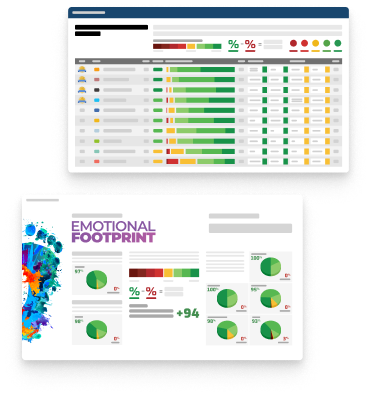
+93 Net Emotional Footprint
The emotional sentiment held by end users of the software based on their experience with the vendor. Responses are captured on an eight-point scale.
How much do users love Kubernetes (K8s)?
Pros
- Helps Innovate
- Enables Productivity
- Unique Features
- Includes Product Enhancements
How to read the Emotional Footprint
The Net Emotional Footprint measures high-level user sentiment towards particular product offerings. It aggregates emotional response ratings for various dimensions of the vendor-client relationship and product effectiveness, creating a powerful indicator of overall user feeling toward the vendor and product.
While purchasing decisions shouldn't be based on emotion, it's valuable to know what kind of emotional response the vendor you're considering elicits from their users.
Footprint
Negative
Neutral
Positive
Feature Ratings
Dynamic Scalability
Resource Availability
Configuration Management
Multi Tenancy
Scripting Support
Task Process Automation
Workflow Support
Systems Administration
Agent or Agentless
Resource Definition
Service Templates
Vendor Capability Ratings
Product Strategy and Rate of Improvement
Breadth of Features
Ease of Customization
Business Value Created
Quality of Features
Ease of Data Integration
Ease of Implementation
Ease of IT Administration
Availability and Quality of Training
Usability and Intuitiveness
Vendor Support
Kubernetes (K8s) Reviews

Gokul D.
- Role: Information Technology
- Industry: Engineering
- Involvement: End User of Application
Submitted Oct 2025
Powerful and Scalable, But Complex to Master
Likeliness to Recommend
What differentiates Kubernetes (K8s) from other similar products?
Kubernetes is great because it helps manage containers at a big scale. It can auto-scale apps, fix problems on its own, and keep everything running smoothly, which makes life a lot easier when you're working with lots of microservices. You can use it on any cloud or even on your own servers, which gives a lot of flexibility. I’ve tried other tools, but Kubernetes just has more control and automation, even though it can be tricky to set up at first. Once you get used to it, it’s hard to find something better.
What is your favorite aspect of this product?
I love the auto-scaling and self-healing features. They automatically adjust and fix issues, saving a lot of time.
What do you dislike most about this product?
What I dislike most is how complicated it is to set up. Even after using it for a while, there are so many things to configure and learn. It’s not very beginner-friendly, and it takes a lot of time to get everything right.
What recommendations would you give to someone considering this product?
If you’re thinking about using Kubernetes, I’d suggest starting small and learning the basics first. It’s pretty complicated at first, so don’t rush in with big projects. Also, using managed services like EKS, AKS, or GKE can save you a lot of setup time and headaches. It’s powerful, but you need patience to get the hang of it.
Pros
- Helps Innovate
- Continually Improving Product
- Reliable
- Unique Features
Please tell us why you think this review should be flagged.
Prashant A.
- Role: Information Technology
- Industry: Engineering
- Involvement: IT Development, Integration, and Administration
Submitted Aug 2026
Powerful & Reliable Orchestration Tool.
Likeliness to Recommend
What differentiates Kubernetes (K8s) from other similar products?
The industry standard and big community support makes k8s diffrent from other. CNCF ecosystem and proper available documentation with troubleshooting avalability makes it diffrent. only as a opensource so lack of customer support is the issue. Still no matter which cloud provider we use or which tool want to integrate there is proper documents available.
What is your favorite aspect of this product?
My favorite part is getting automatically to the desired state even if your pod or node goes down k8s will automaticallly try to make it to desired state. it will restart or reschedule and make it to desired state using kubelet and etcd storage.
What do you dislike most about this product?
Customer support availability and yaml configuration is the part that i dont like about k8s.
What recommendations would you give to someone considering this product?
If you have resource with good knowledge of k8s then you should surely move to k8s. it will help to reduce cost and improve the infrastructure building.
Pros
- Reliable
- Enables Productivity
- Inspires Innovation
- Caring
Please tell us why you think this review should be flagged.

Anshuman T.
- Role: Information Technology
- Industry: Healthcare
- Involvement: IT Development, Integration, and Administration
Submitted Apr 2026
Kubernetes is powerful but needs learning curve
Likeliness to Recommend
What differentiates Kubernetes (K8s) from other similar products?
Kubernetes really stands out because of how flexible and extensible it is. Like It's not just a container orchestrator, it kind of becomes a full platform once you start adding CRDs, operators and all. Compared to other tools, you're not locked into a specific way of doing things, which is great but also a bit overwhelming at times. Also the ecosystem is huge. Anything you want, monitoring, scaling, networking. There's already something built for it. That's honestly what makes it different from simpler orchestration tools.
What is your favorite aspect of this product?
The scalability and automation it provides is probably the best part. Once things are set up properly, deployments, rollbacks, autoscaling, all of it just works without much manual effort. It makes handling production workloads way easier compared to traditional setups.
What do you dislike most about this product?
The complexity, honestly. It's very powerful but comes with a steep learning curve. Even simple things can take time to figure out, expecially networking and debugging issues. Also managing yaml configs everywhere can get a bit messy.
What recommendations would you give to someone considering this product?
I would say go for kubernetes if you actually need it, not just because it's popular. It works really well for large scale or microservices based systems, but for smaller setups it might feel like overkill. Also invest time in learning the basics properly, networking, storage, and debugging. And try using managed Kubernetes services initially, it makes things much easier.
Pros
- Saves Time
- Effective Service
- Respectful
- Client Friendly Policies
Please tell us why you think this review should be flagged.
Get Instant Access<br>to this Report
Get Instant Access
to this Report
Unlock your first report with just a business email. Register to access our entire library.
© 2026 SoftwareReviews.com. All rights reserved.